Tolerating Joy is the capacity to let good feelings land and linger without flinching, dismissing, or bracing for the other shoe. For many of us, the survival system is over‑trained on threat; when joy arrives, it feels unsafe or “too much,” so we numb, minimize, or rush past it. Building tolerance for joy rebalances attention so wildflowers get equal presence with the weeds.
Why it matters for thriving:
Joy fuels resilience and creativity; it’s energy for life.
It anchors an internal reference for goodness—your Cup of Joy—so you’re not dependent on perfect conditions.
It lets “yes‑and” be real: there are threats, and my thriving matters too.
I can see my daughter enjoying life… and not feel it… or I can feel it so intensely it’s too much… or I can savor themoment. Same possibility for joy is present. But my capacity to be in it varies.
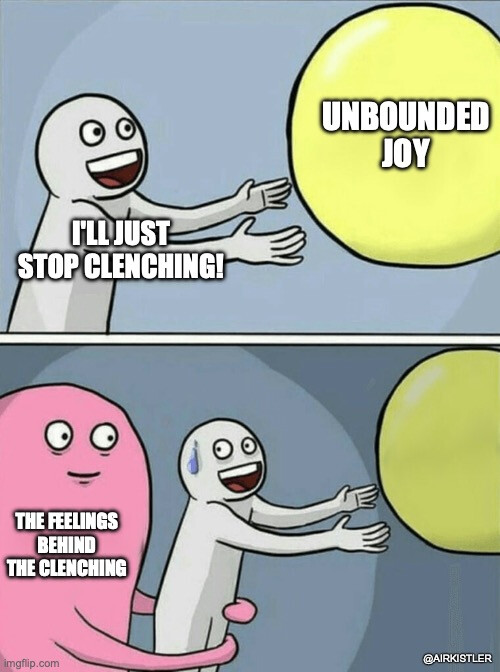
Same goes for this moment of writing to you. If I’m clenched up “trying to write” there’s no smile. Pause and unclench… my tolerance for a soft smile rises.
Tolerance? Yes. Tolerance. It’s a range. How cold a shower can you tolerate? How hot a bath can you tolerate? There are physical limits (too hot and we damage our skin; too cold and we lose too much body heat). Sure, AND there are emotional limits. If I despise cold showers, I’ll clench up as I feel the water: “TOO COLD!!”
Same goes with kids laughing — shouting with robust aliveness. TOO MUCH!! We grip and tense when things are too… anything. Even joy.
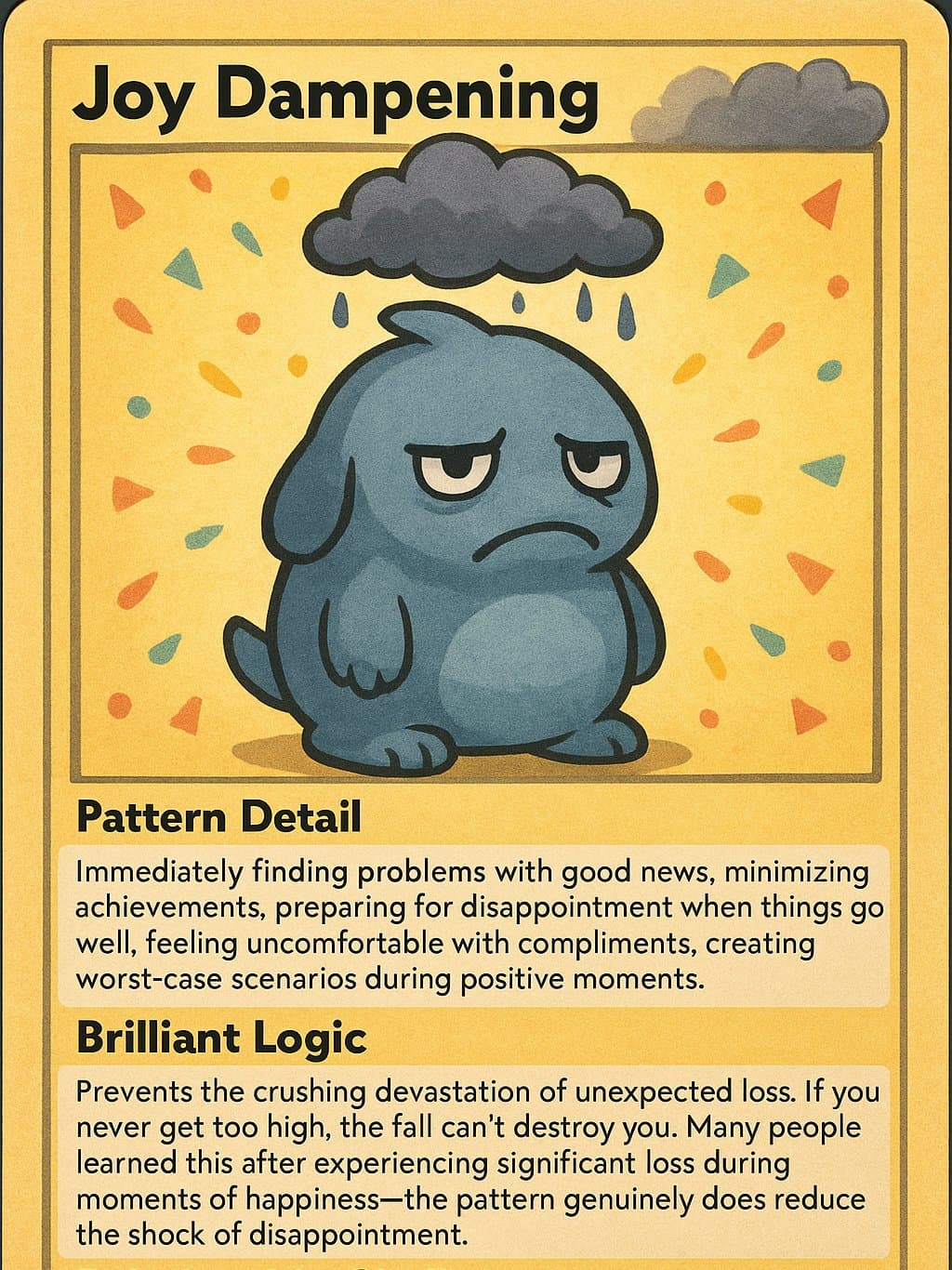
We also brace when we just “know” the other shoe is going to drop… on our foot, on our joy.
Can we do anything about this? Absolutely. People can condition themselves to be resilient with intention and practice. If they want to. If it matters to them.
If experiencing more Joy is something you’d like, building your tolerance for its edges is a real skill. We’ll be “going there” on Sunday and we invite you to join us!
Hey Gus, Do you think it is okay to reschedule a workshop that you COULD “push yourself” to do, but it isn’t really a YES for today for you or your co-creator? If so, what makes it ok?
Short answer: yes. It’s not just “okay”—it’s wise.
What makes it okay:
Integrity of the container: if it’s not a Yes for the facilitators, the field you hold won’t be clean or energizing. People feel that.
Nervous system safety: pushing through drains you, seeds resentment, and can ripple into the relationship with your co‑creator.
Co‑creation honors “Yes‑to‑Yes”: when one or both are a maybe/no today, pausing lets a truer Yes emerge—often with better timing and clearer content.
Modeling: rescheduling teaches your community that alignment matters more than performance. That’s resilience in practice.
When a theme like Tolerating Joy is still unfolding in us and in the field, pressing “go” can flatten what wants to deepen. Allowing gives it breath. It protects the container, honors your bodies, and models the very skill you’re teaching—letting goodness come in at a pace that’s safe and sincere.
This is helpful and actually also brings up sadness for me. Not just for myself but for the precious people whose expression and experience of joy I may be altering too with my own fears and blocks to joy and my narrow focus.
“Let me go to the other room so you have space to be joyful and I get the more quiet my body-mind craves right now.”
I don’t know the answer. The sadness is, for me, pointing to THIS MATTERS rather than getting mired down.
RickBot gave me, “This is allowed.” A simple mantra I just used as the gang of neighborhood kids are outside the window playing loudly and happily while I am trying to finish up a story before my mom and brother gets here. “This is allowed” is a way to remind me that spaces DO allow a greater measure of joy, more often than my initial reaction would say.
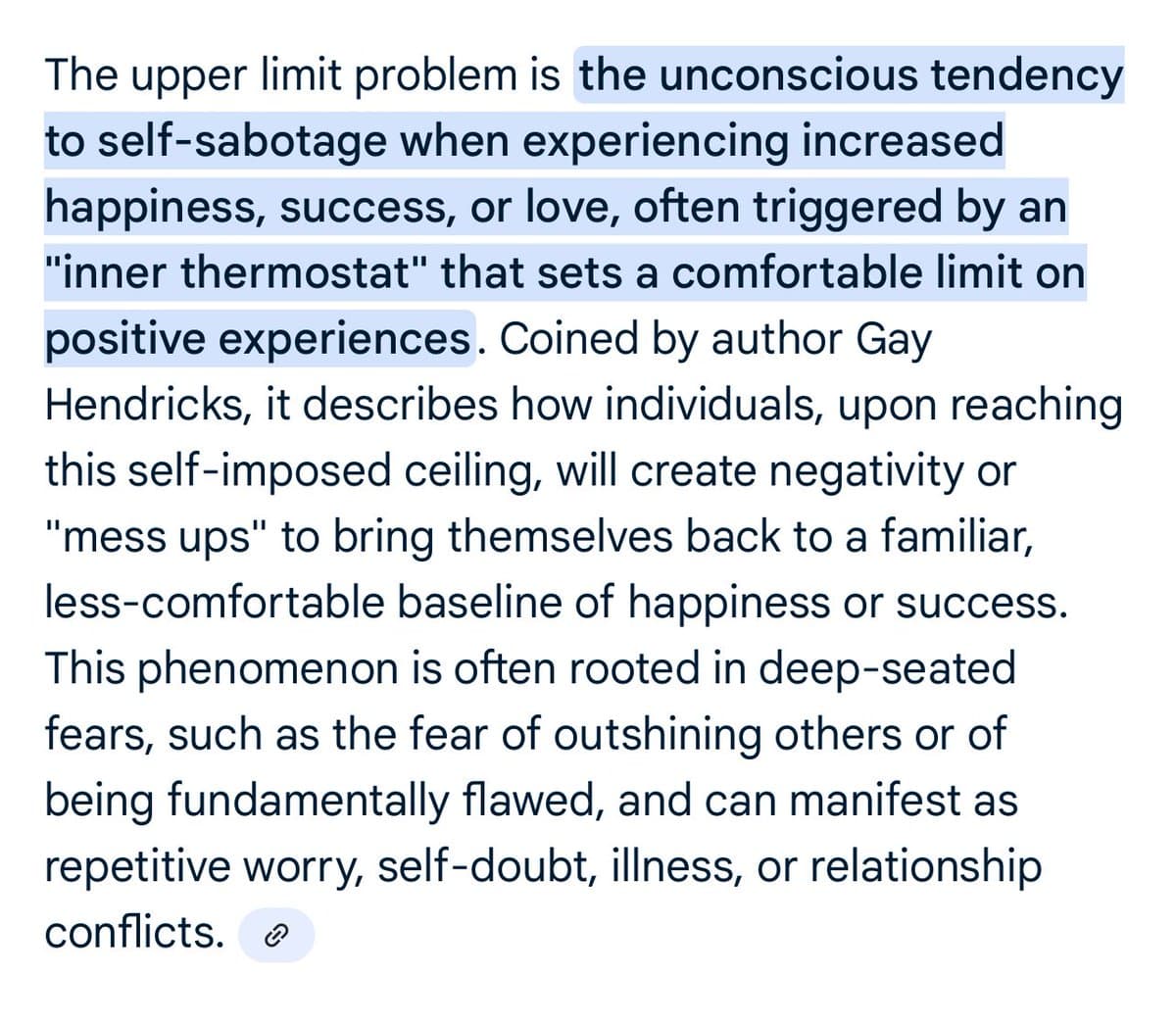
The upper limit problem is the unconscious tendency to self-sabotage when experiencing increased happiness, success, or love, often triggered by an “inner thermostat” that sets a comfortable limit on positive experiences.
Coined by author Gay Hendricks, it describes how individuals, upon reaching this self-imposed ceiling, will create negativity or “mess ups” to bring themselves back to a familiar, less-comfortable baseline of happiness or success.
This phenomenon is often rooted in deep-seated fears, such as the fear of outshining others or of being fundamentally flawed, and can manifest as repetitive worry, self-doubt, illness, or relationship conflicts.
I feel like I am experiencing an upper limit daily at the moment and it is quite hard and painful. Made harder by the observation that my upper limit doesn’t just hurt me but others that I love too.
Gus gave me this little reminder statement. When I use it, I notice I can give a lot more range to the kids (and life):
This is Allowed.
At minimum, it pauses the reactive part of my brain which is being distracted or amplified by what they are doing. It makes the “upper limit” different, or even the strategy I use different, too.
It seems to stop “control dramas” and let me be more in savvy self-protection where needed or tolerance where possible.
 Replay is below